Preparation & Response
Storm & Bushfire Preparation
Practical preparation for Mid North Coast conditions, and what to do when severe weather has already been through.
If there is an immediate risk to people, buildings, roads or powerlines, keep clear of the area and call 000, or Essential Energy on 13 20 80 for powerlines, before calling us.
Call 0400 912 258Storm Preparation & Recovery
Before, during and after a storm
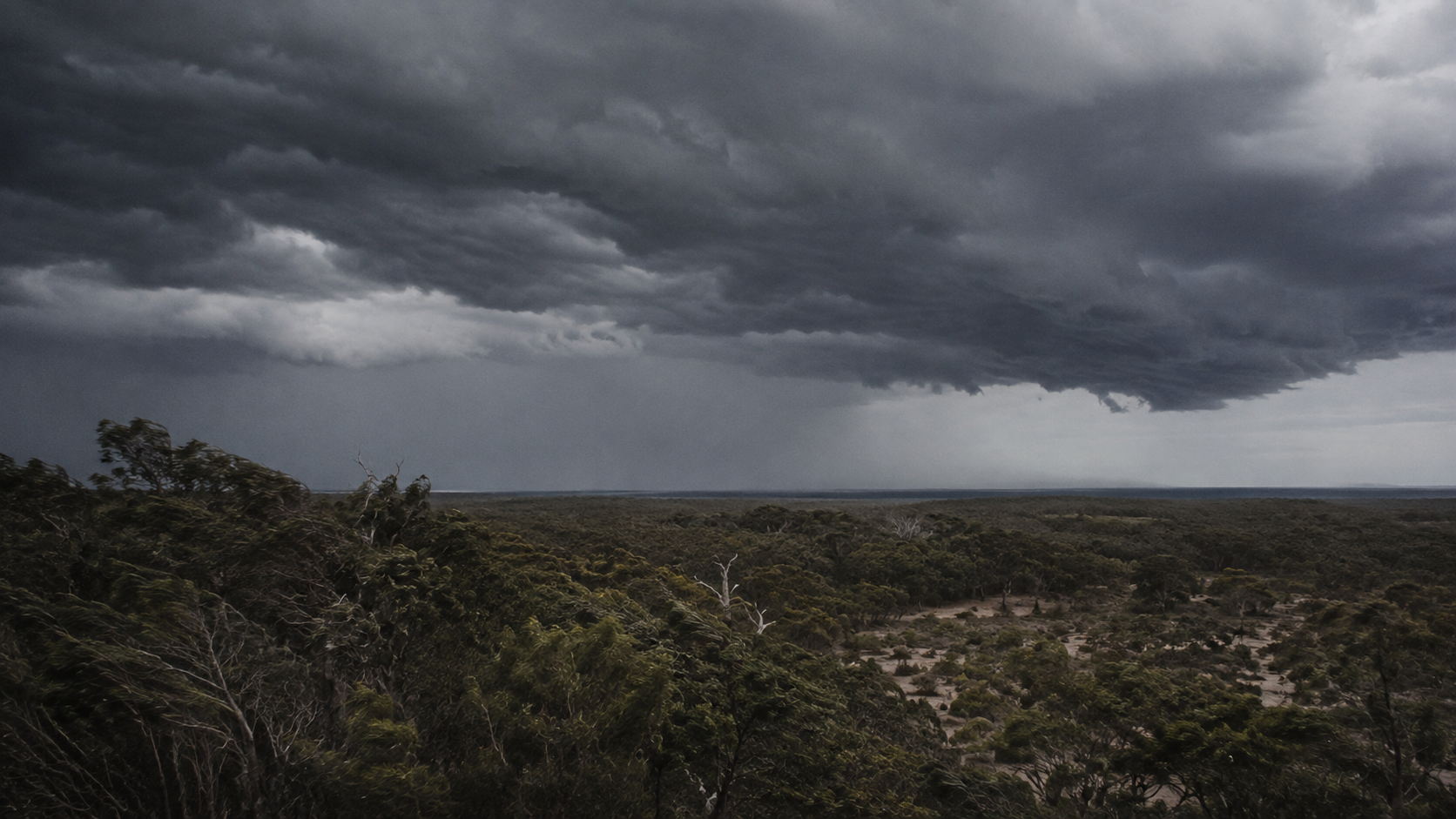
Storm season on the Mid North Coast typically runs from October through to March. Work done before the season costs a fraction of an emergency callout, and it is planned rather than reactive.
Preparation checklist
- — Remove deadwood and unstable limbs before the season starts
- — Check trees overhanging roofs, sheds, driveways and boundaries
- — Consider crown thinning on exposed sites to reduce wind loading
- — Clear vegetation growing toward powerlines and service lines
- — Clean gutters and clear ground litter that can block drainage
- — Note which trees you would want checked if a storm goes through
Signs that warrant an inspection
- — A limb caught in the canopy that has not yet come down
- — Fresh cracks or tears where a branch meets the trunk
- — A new lean, or a lean that appears to have increased
- — Soil cracking or lifting turf around the base of a tree
- — Bark split or torn along the trunk after high wind
- — Any of the above on a tree near a building or driveway
What to do after a storm
- — Keep clear until you are confident the area is safe
- — Stay well away from anything touching powerlines
- — Photograph damage before anything is moved
- — Walk the property and look for changes, not just obvious damage
- — Note anything hanging or unstable and keep people away from it
- — Call us with photos — we can often advise over the phone
Taking photos safely
Photos are genuinely useful — for us and for any insurance claim. But no photo is worth putting yourself at risk.
- — Stay on the ground and keep well back from damaged trees
- — Never stand under a hanging or partly detached limb
- — Take one wide shot showing the whole tree and its surroundings
- — Take one closer shot of the specific damage, if safe to do so
- — Include something for scale — a car, a fence, a doorway
Insurance documentation
Good documentation makes a claim far simpler. General guidance only — check your policy and speak to your insurer.
- — Photograph the damage before any clean-up begins
- — Take dated photos from several angles
- — Record the date and approximate time of the weather event
- — Keep written quotes and invoices for any work carried out
- — Contact your insurer early — many have specific process requirements
Official guidance
The NSW State Emergency Service is the lead agency for storm and flood damage. Their storm planning guidance covers what to do around the property before the season and what to expect afterwards.
Bushfire Preparation
Vegetation management & fuel reduction
Preparation is far easier before the season starts. August through November is the practical window on the Mid North Coast — once conditions turn, restrictions and heat limit what can safely be done.
Vegetation management overview
The aim is to reduce the amount of fuel available close to buildings and to break up continuous vegetation that could carry fire toward a structure. On most properties that means addressing ground litter, understorey density, deadwood in the canopy, and branches overhanging roofs. It rarely means clearing everything — well-managed trees can provide useful shelter from radiant heat and ember attack.
Deadwood & fuel considerations
- — Deadwood in the canopy is a significant ember and fuel source
- — Accumulated bark and ground litter close to the house carries fire
- — Continuous understorey can carry fire from ground level into canopy
- — Branches overhanging roofs and gutters increase ember risk
- — Green waste piles left on site are themselves a fuel load
Access & clearance
- — Emergency vehicles need clear width and height on access tracks
- — Overhanging branches along driveways narrow effective clearance
- — Turning space matters as much as track width on rural properties
- — Gates, cattle grids and bridges should be usable and clearly marked
- — Review access annually — regrowth narrows tracks faster than expected
Seasonal checklist
August — Start early
- · Begin fuel reduction around buildings
- · Assess deadwood in canopies near the house
- · Review access track clearances
September — Build on it
- · Continue clearance work around structures
- · Address understorey density in key zones
- · Book any larger works needed
October — Push to finish
- · Complete the bulk of clearance work
- · Remove accumulated ground litter
- · Clear gutters and roof debris
November — Final checks
- · Finish remaining deadwood removal
- · Confirm green waste has been removed
- · Walk the property and review
Official guidance
Bushfire obligations vary by property, land classification and local council area. The NSW Rural Fire Service publishes current guidance on getting a property ready for the season, and a separate tool for checking 10/50 vegetation clearing entitlements.
The advice on this page is general and obligations vary by property. Confirm your specific requirements with the RFS and your local council.
Get prepared before the season
Call and speak to our team about what is practical on your property.